
Itinerary ideas, cultural insights, luxury tips and practical planning guides for every India traveller.
Combining Delhi, Agra and Jaipur with Kerala creates a private India journey with far greater variety than a standard single-region holiday. The first half covers the historic Golden Triangle, including Delhi's monuments, the Taj Mahal in Agra and Jaipur's forts and palaces. The second half moves south to Kerala for green landscapes, waterways, coastal weather, hill country and a noticeably slower travel rhythm.
A well-arranged Delhi Agra Jaipur Kerala tour package normally requires at least 12 to 14 days. Travellers with 15 or 16 days can make the route even more comfortable by adding an extra night in Kerala rather than filling the itinerary with additional cities.
The most important logistical point is the distance between Rajasthan and Kerala. Jaipur and Kerala should not be connected by road as part of a normal holiday. A domestic flight is required, usually through the most practical airport and connection available for the selected travel dates. This means the itinerary needs to be built around real flight schedules rather than treating Kerala as a simple extension after Jaipur.
Once travellers reach Kerala, the style of transportation changes. Private road transfers work well between Kochi, Munnar, Thekkady and the backwater region. A traditional houseboat or quality backwater resort can then become one of the main experiences of the southern section.
For two adults sharing one room, a good four-star private trip covering the Golden Triangle and Kerala can realistically cost around US$4,000 to US$5,800 for two travellers, excluding international flights. Five-star arrangements can reasonably reach US$6,500 to US$9,500 for two, while premium luxury hotels, superior houseboats, suites and high-end resorts can push the total above US$11,000 to US$16,000.
Domestic airfare, hotel season, houseboat category and the exact Kerala route can significantly affect these figures.
The northern part of the journey should normally receive around six or seven nights. Reducing Delhi, Agra and Jaipur to three or four nights simply to create more time in Kerala weakens the entire itinerary.
Delhi is the natural starting point for many international travellers.
Two nights should be considered a practical minimum, while three nights are better when the international flight arrives late or travellers want a slower first day.
The arrival day should remain relatively light. Airport formalities, baggage collection and the hotel transfer can take time, and international passengers may be tired after a long journey.
Sightseeing can begin the following morning.
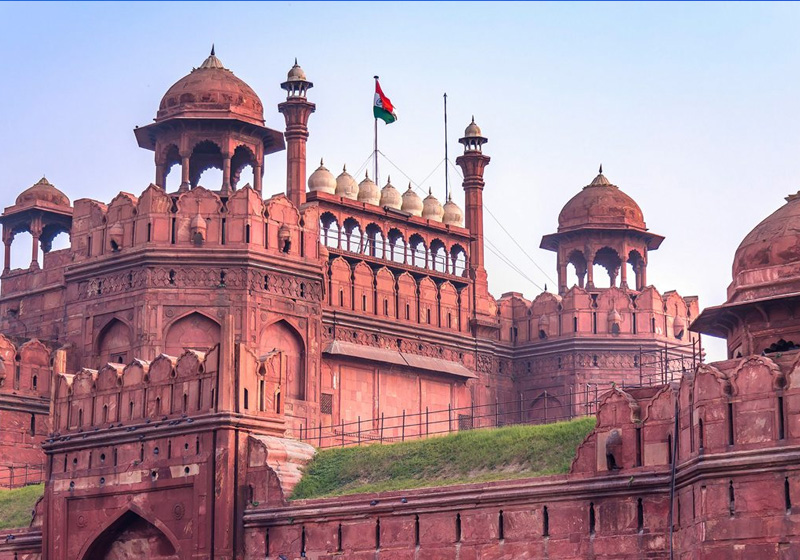
Delhi contains very different historic areas, and a private itinerary can combine selected Old Delhi and New Delhi attractions according to the traveller's interests.
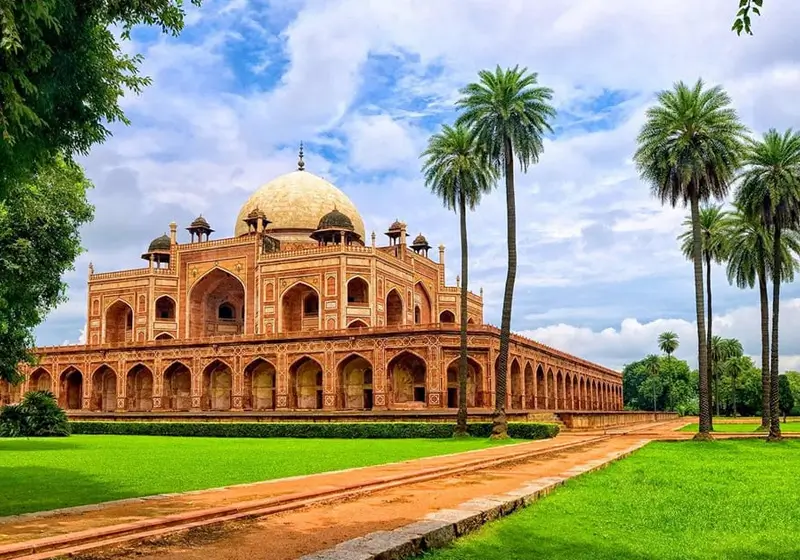
Jama Masjid and the Chandni Chowk area introduce the dense historic city, while Humayun's Tomb and Qutub Minar provide important architectural visits. India Gate and selected parts of the capital can be incorporated according to the day's route.
A private Delhi sightseeing tour should not attempt to cover every attraction simply because a car is available. Four or five meaningful visits are often preferable to rushing between numerous monuments.
The journey continues from Delhi to Agra by private road transport.
Under normal traffic conditions, travellers can broadly expect around four hours, although the exact duration depends on the pickup point and road conditions.
Agra should receive at least one night.
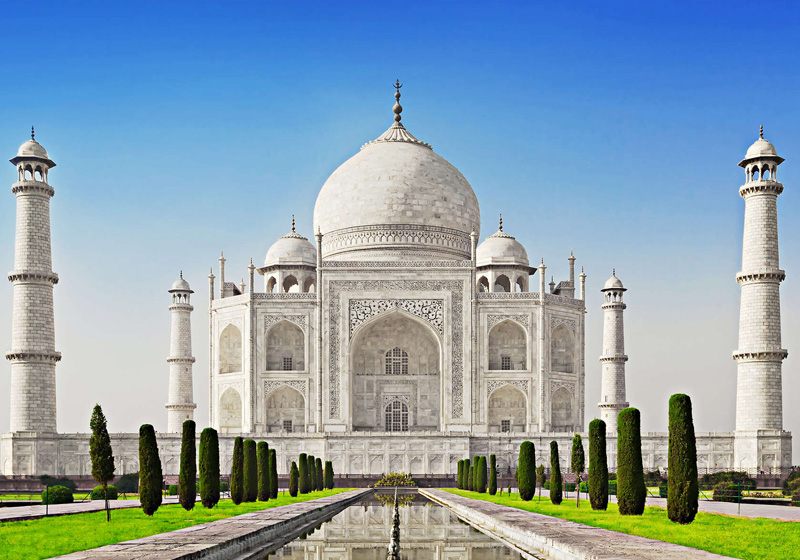
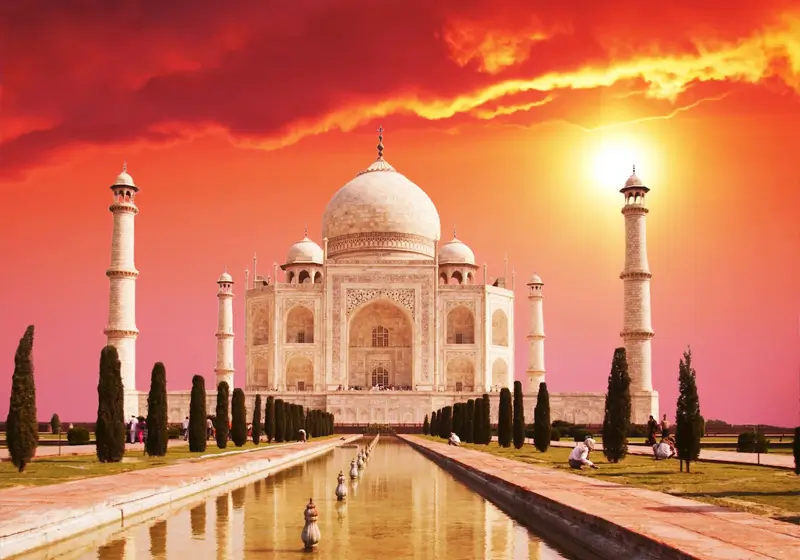
Agra Fort can be visited on the arrival day when timing permits. The Taj Mahal can then be kept for the following morning.
Travellers interested in photography frequently request sunrise. Others may prefer a later visit, particularly families with younger children and guests who do not want repeated early starts.
The Taj Mahal is closed to general visitors on Fridays. This must be considered when arranging the entire Golden Triangle and Kerala itinerary because one incorrect Agra date can disrupt the route.
After Agra, travellers can continue to Jaipur. Fatehpur Sikri can be included during the road journey when desired, but visitors should allow enough time for the historic site.
Jaipur deserves two or three nights.
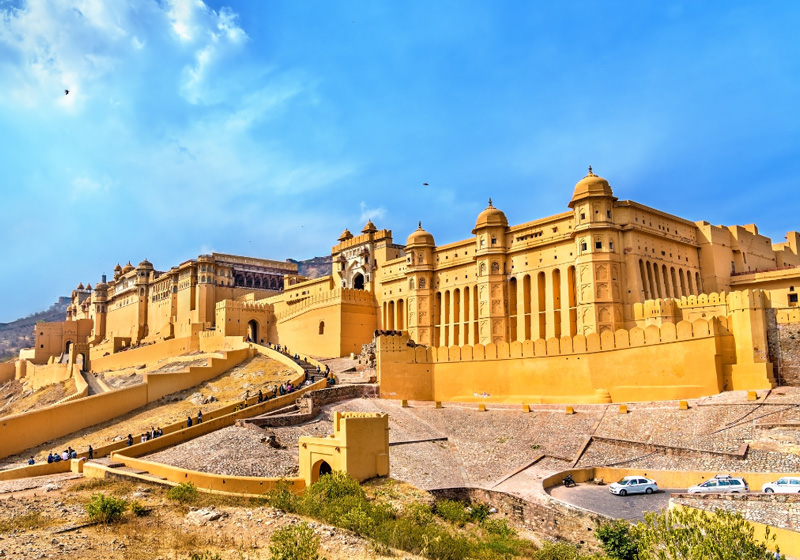
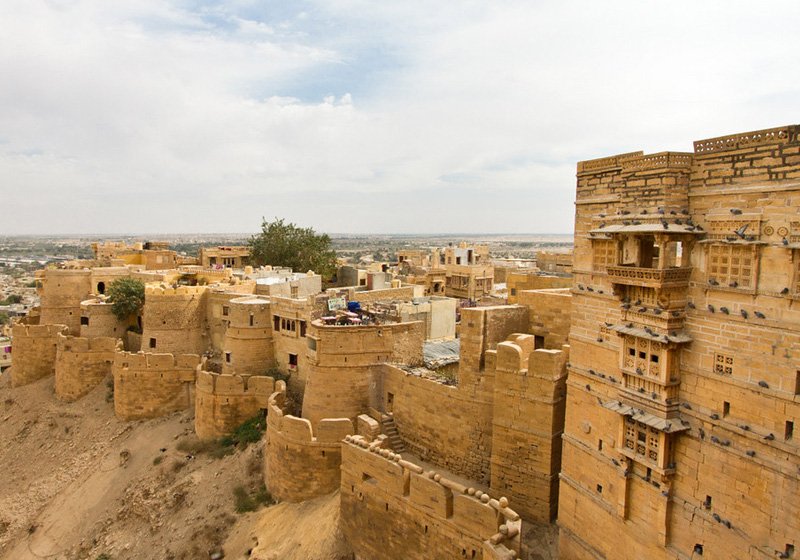
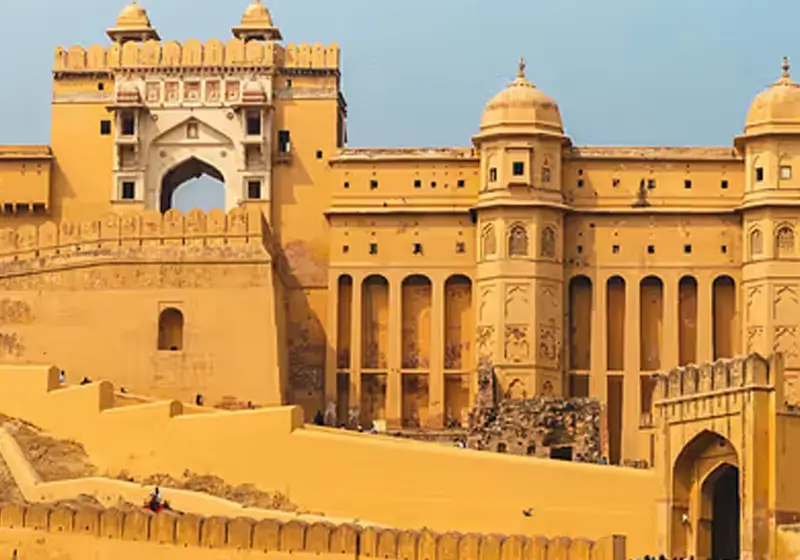
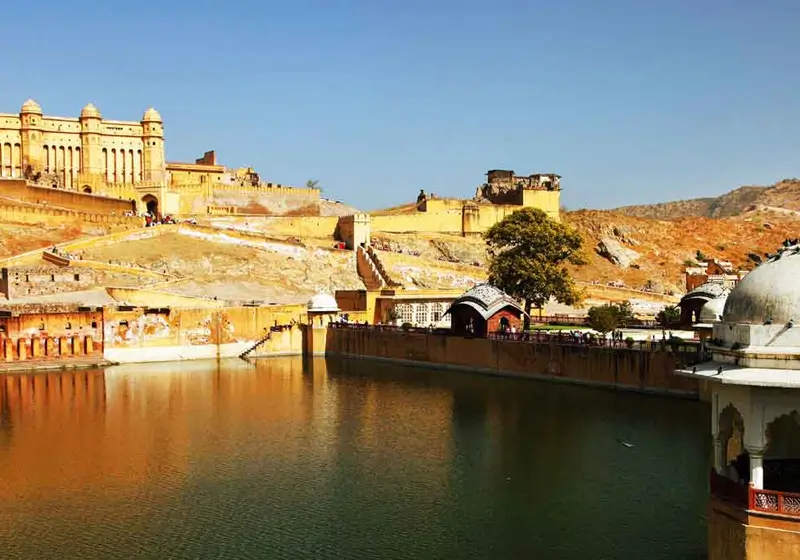
Amber Fort should be one of the principal visits. City Palace and Jantar Mantar can be combined with the old-city section, while Hawa Mahal remains an important part of Jaipur's historic streetscape.
Three nights also create time for Rajasthan's crafts and markets.
Travellers interested in block-printed textiles, jewellery, carpets or handicrafts can allocate a few hours to shopping. Those who are not interested should be able to keep the time free.
This is where private touring becomes particularly useful. The schedule can reflect the passengers rather than a fixed coach itinerary.
The transition from Jaipur to Kerala is the biggest transport decision in the entire trip.
The two regions are separated by a substantial distance, so air travel is the practical choice. Depending on airline schedules, travellers may find a suitable flight to Kochi or another Kerala gateway, sometimes with a connection.
Direct services should not be assumed until the exact date has been checked.
A Golden Triangle Kerala tour package should therefore show the domestic flight sector clearly. The quotation should identify whether airfare is included, which baggage allowance applies and whether airport transfers are provided at both ends.
Baggage deserves particular attention.
International passengers may arrive in India with baggage allowances that differ from those offered on domestic tickets. Travellers carrying large suitcases should check the exact domestic fare conditions rather than assuming the international allowance continues automatically.
An early morning flight can technically save daylight, but the itinerary should consider the overall travel experience.
Leaving a Jaipur hotel extremely early, spending several hours flying and connecting, and then beginning a full Kochi sightseeing programme immediately after landing may make the day unnecessarily demanding.
A better arrangement is often to use the flight day primarily for transportation. After arrival in Kerala, travellers can transfer to their hotel, have dinner and begin sightseeing the following morning.
Private airport transfers should be included.
The northern driver will normally finish the road portion at the appropriate airport. A different vehicle and driver will then handle the Kerala section.
Travellers should not expect the same car to move between Rajasthan and Kerala.
Experience the incredible contrast of India, from Delhi’s historic landmarks and Agra’s Taj Mahal to Jaipur’s royal heritage and Kerala’s tropical backwaters. Travel comfortably with a private car and driver, trusted local guides and carefully selected hotels. Whether you are travelling as a couple, family or small group, enjoy a seamless journey tailored to your interests and travel style.
Kochi works extremely well as the first Kerala destination because it combines airport access with historic areas and provides a practical starting point for Munnar, the backwaters and other parts of the state.
Approximately two nights can be allocated to Kochi.
The first night may simply be the arrival night after the flight from northern India. The following day can then be used for sightseeing at a comfortable pace.
Fort Kochi is one of the main visitor areas. Its streets and historic buildings reflect several layers of maritime and colonial history.
The waterfront and traditional fishing structures are among the area's familiar visual features, while other historic sites can be included according to current opening arrangements and the traveller's interests.
Mattancherry is another important part of the city's historic landscape.
A private guide can make the visit more meaningful by explaining the trading history of Kochi and the communities that shaped the city.
A private Kerala tour from Kochi should also allow some independent time. After several monument-heavy days in Delhi, Agra and Jaipur, travellers may appreciate walking through selected parts of Fort Kochi or spending a quieter evening at the hotel.
Accommodation ranges from smaller heritage properties to modern luxury hotels.
Couples may prefer a character property around the historic area, while families can choose larger hotels with swimming pools and more extensive facilities.
Kochi is also a good point to adjust to Kerala's climate before travelling into the hill country.
Munnar provides a major visual change from both the Golden Triangle and coastal Kerala.
The road from Kochi to Munnar involves hill driving, and travellers should broadly allow four to five hours or more, depending on traffic, weather, road conditions, stops and hotel location.
The distance on a map can appear modest, but mountain roads naturally reduce average driving speed.
Travellers prone to motion sickness should prepare for winding sections.
Two nights in Munnar are advisable.
Arriving after a substantial drive and departing again the following morning provides very little time to appreciate the destination.
The landscape around Munnar is known for tea-growing areas, mountain scenery and cooler conditions than the coast. The actual sightseeing programme can include suitable viewpoints, tea-related visits and other local attractions according to current access.
A Munnar private tour package should avoid trying to cover every named viewpoint in a single day.
Road conditions and local traffic can affect travel times, particularly during busy periods. Spending half the day repeatedly entering and leaving the vehicle simply to stop at numerous similar viewpoints does not necessarily improve the experience.
A better day can combine selected scenery with a meaningful tea-related visit and enough free time at the hotel.
Hotel location matters in Munnar.
Some properties are positioned away from the main town and may require additional driving. This can be worthwhile when the property offers better views and a quieter environment, but travellers should understand the trade-off before booking.
Luxury resorts in the hills can become one of the more memorable accommodation experiences of the Kerala section.
Thekkady can be included between Munnar and the backwaters for travellers who have enough time.
The road journey usually occupies several hours because the route continues through hilly terrain. Travellers should treat it as another significant transfer rather than expecting motorway-style travel times.
Thekkady is associated with the Periyar area, forest landscapes and spice-growing regions.
A Munnar Thekkady tour package can include a spice-related visit, selected nature activities and other locally available experiences. The exact programme should be chosen according to interests rather than automatically booking every optional activity offered in the destination.
Travellers should also maintain realistic wildlife expectations.
The experience here is different from a dedicated tiger safari destination such as Ranthambore. Visitors should not assume that simply entering a wildlife area will produce sightings of particular large animals.
The surrounding spice-growing region can be particularly interesting for international travellers. Pepper, cardamom and other crops associated with Kerala can be seen in appropriate settings.
One or two nights can be allocated to Thekkady.
On a 12-day trip, removing Thekkady may produce a more comfortable schedule. On a 14- or 15-day itinerary, it can fit naturally between Munnar and the backwaters.
This is an important distinction.
The best North and South India itinerary is not necessarily the one containing the most destinations. If including Thekkady means every Kerala hotel becomes a one-night stop, removing it can make the trip considerably better.
The backwater section is one of the main reasons travellers combine Kerala with the Golden Triangle.
After Delhi's traffic, the Taj Mahal, Jaipur's forts and the mountain roads around Munnar, spending time around Kerala's waterways creates a very different final phase.
Travellers generally have two main accommodation approaches: an overnight houseboat or a land-based backwater resort.
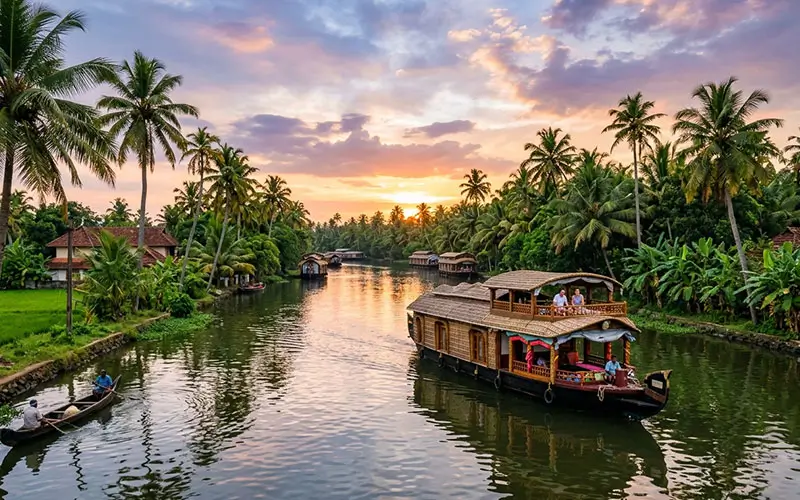
An Alleppey houseboat tour is popular because guests stay directly on the waterways. A typical arrangement can include check-in around midday, cruising during permitted periods, meals onboard and an overnight stay.
Exact cruising schedules and operating practices depend on local rules and the boat operator.
The quality of houseboats varies enormously.
A low-cost boat and a premium houseboat should not be treated as the same product simply because both include a bedroom and meals.
Travellers should ask about air conditioning, cabin size, bathroom standard, dining arrangements, crew, meal inclusions and whether the boat is private.
Air conditioning is particularly important.
Some houseboats may operate bedroom air conditioning only during specified hours, while higher-category boats may provide more extensive arrangements. This should be confirmed before payment rather than assumed.
For couples, a private Kerala houseboat with one cabin can provide greater privacy than a multi-room shared vessel.
Families need to check the exact number of cabins and whether common areas are shared with unrelated passengers.
The alternative is a luxury backwater resort.
This can be more comfortable for travellers who prefer a large room, swimming pool, spa facilities and conventional hotel services.
A resort stay can still include a shorter backwater cruise without requiring guests to sleep on a boat.
Some travellers use both: one night on a private houseboat followed by one or two nights at a backwater resort.
This is particularly attractive on a longer itinerary.
Combine India’s celebrated Golden Triangle with the serene beauty of Kerala. Admire the Taj Mahal, discover Jaipur’s magnificent forts and palaces, then continue south for scenic hill stations, tropical landscapes and relaxing backwater experiences. Enjoy personalized service, private transportation and carefully arranged stays throughout.
A fourteen-day route provides a strong balance between northern sightseeing and southern relaxation.
The first three nights can be spent in Delhi, including the arrival day and two sightseeing days.
Travellers can then move to Agra for one night, seeing Agra Fort after arrival and the Taj Mahal the following morning.
The next road journey reaches Jaipur, potentially via Fatehpur Sikri.
Three nights in Jaipur provide enough time for Amber Fort, City Palace, Jantar Mantar, the old city and some free time.
A domestic flight then connects the northern section with Kerala.
Kochi can receive two nights, including the arrival night.
Munnar can receive two nights.
Travellers then need to decide whether Thekkady or a longer backwater stay matters more.
For many first-time visitors, going from Munnar towards the backwaters and allocating the final nights there creates a more relaxed finish.
A 14 day Golden Triangle and Kerala tour should also account for the international departure city. If the final international flight leaves from Kochi, the route can finish conveniently in Kerala.
If travellers need to return to Delhi or Mumbai, an additional domestic flight and sufficient connection time must be included.
International and domestic tickets should never be connected too tightly when they are issued separately. Delays can create serious problems when airlines have no responsibility for a separate onward booking.
The Delhi Agra Jaipur Kerala tour cost depends more heavily on internal transportation than a standard Golden Triangle package because the itinerary includes a long domestic flight sector and separate transport operations in North and South India.
For two adults sharing one room, a good four-star 12- to 14-day private journey can realistically cost approximately US$4,000 to US$5,800 for two travellers.
This can include good hotels with breakfast, private Golden Triangle transportation, Kerala transfers, local guides and a quality backwater stay, depending on the exact quotation.
A five-star package can cost approximately US$6,500 to US$9,500 for two people.
Premium luxury can reach approximately US$11,000 to US$16,000 or more for two travellers, especially when the itinerary uses prestigious hotels, premium suites, high-end Kerala resorts and superior private houseboats.
International airfare is normally separate.
Domestic flights should be shown clearly. Prices vary according to route, date, booking time, fare class and baggage allowance.
For a four-star journey, a broad working land budget of approximately US$300 to US$420 per day for two people is reasonable, with domestic flights added according to the final route.
Five-star private travel can broadly require US$480 to US$700 per day for two, while premium luxury can exceed US$800 to US$1,100 per day for the couple.
The houseboat can create a significant pricing difference.
A basic boat should not be compared with a premium private one-cabin houseboat offering higher accommodation and service standards.
Accommodation requirements change dramatically between the Golden Triangle and Kerala.
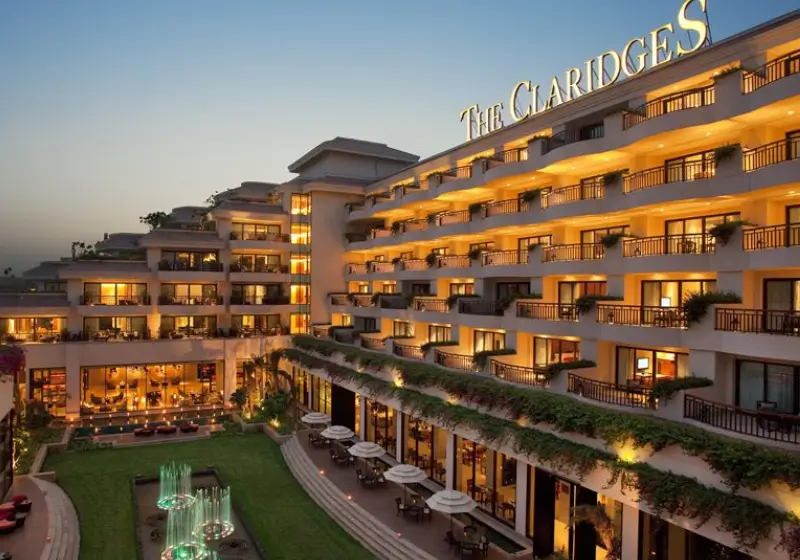
Delhi offers modern four-star and five-star city hotels across a broad price range.
Agra includes conventional accommodation as well as premium properties offering selected Taj Mahal views.
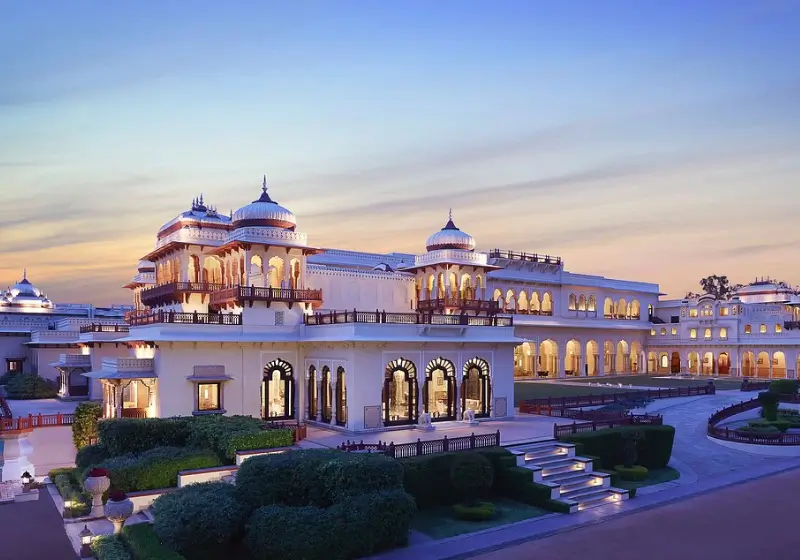
Jaipur has strong heritage and palace-hotel options.
Kochi offers both modern hotels and smaller heritage properties.
Munnar's accommodation often focuses more heavily on landscape and resort setting.
The backwaters introduce houseboats and waterfront resorts.
For good four-star hotels, travellers can broadly encounter room rates around US$80 to US$160 per night, although actual prices can rise during high-demand dates.
Five-star rooms can commonly cost approximately US$170 to US$350 per night, depending on destination and property.
Premium palace hotels and luxury resorts can cost US$400 to US$1,000 per night or considerably more for high-category rooms and suites.
A good-quality private houseboat can broadly require around US$250 to US$500 per night for a couple, including the accommodation and specified meals, while higher-end luxury boats can cost significantly more.
These are budgeting ranges rather than guaranteed rates.
The exact Kerala houseboat price for two people depends on boat category, number of cabins, exclusivity, air-conditioning arrangement, meal standard and operating location.
Travellers should request recent photographs and clear specifications for the exact category being booked.
The road transport should normally be divided into two sections.
A northern vehicle can handle Delhi, Agra and Jaipur. The driver service then ends before the flight to Kerala.
After arrival in Kerala, another private vehicle handles Kochi, Munnar, Thekkady and the backwater region according to the itinerary.
This is more practical than attempting to retain one vehicle across the entire country.
The private car and driver India tour quotation should state vehicle categories separately if different cars are being used in the north and south.
A couple may use a comfortable sedan or MPV.
For the hill roads around Munnar and Thekkady, comfort becomes particularly important. Travellers prone to motion sickness may prefer a spacious vehicle.
Families should check luggage capacity carefully.
The transport price should clearly address fuel, tolls, parking, applicable taxes and driver expenses.
Local sightseeing guides are separate from drivers.
Professional guides are especially valuable in Delhi, Agra and Jaipur because of the historical complexity of the monuments.
Kochi can also benefit from a knowledgeable local guide for visitors interested in its trading and cultural history.
This route is particularly strong for travellers who want contrast within one India holiday.
Couples can combine the Taj Mahal and Rajasthan's heritage hotels with Munnar resorts and a private backwater experience.
Families gain more variety than they would from spending the entire trip visiting forts and palaces. Kerala's landscapes and slower days can break up the monument-heavy northern section.
Senior travellers can also enjoy the route, but road journeys should be arranged carefully. The hill roads around Munnar and Thekkady can be winding, and too many one-night stops should be avoided.
Travellers who have only seven or eight days should not attempt this combination. The domestic flight and internal transfers consume too much of a short holiday.
Around twelve days is the practical lower end, while fourteen or fifteen days produces a much stronger North and South India private tour.
The biggest advantage is the contrast.
Delhi, Agra and Jaipur provide monumental architecture and dense historic cities. Kerala replaces those environments with hills, waterways, greenery and a different regional culture.
That contrast makes the journey feel like two substantial sections of India rather than a longer version of the same sightseeing circuit.
Around 12 to 14 days is advisable. Fourteen days provides a better balance, allowing adequate time for the Golden Triangle as well as Kochi, Munnar and the Kerala backwaters.
For two travellers, a good four-star private trip can realistically cost around US$4,000–US$5,800, excluding international flights. Five-star arrangements can cost approximately US$6,500–US$9,500, while premium luxury can exceed US$11,000.
A domestic flight is the practical option. The best arrival airport and flight connection depend on the actual travel date. Direct flights should be confirmed rather than assumed.
Yes, for travellers interested in hill scenery, tea-growing landscapes and cooler mountain conditions. Two nights are preferable because the road journey from Kochi takes several hours.
Not necessarily. On a shorter trip, removing Thekkady can provide more time in Munnar or the backwaters. It fits more comfortably when the total itinerary reaches around fourteen or fifteen days.
Yes, when travellers want to experience the waterways directly. The boat category matters considerably, so cabin quality, air conditioning, meals and whether the vessel is private should be confirmed.
A good private houseboat can broadly cost around US$250–US$500 per night for a couple, while premium luxury vessels can cost considerably more. Rates depend on category and inclusions.
Normally, separate vehicles are more practical. One driver can handle the Golden Triangle road section, while another vehicle and driver handle Kerala after the domestic flight.
This depends on the package. Travellers should check whether monument admission, guides, domestic airfare, backwater cruising and any Kerala activities are included or payable separately.
Yes. A Delhi Agra Jaipur Kerala tour package is particularly suitable for first-time travellers with at least twelve to fourteen days because it combines the Taj Mahal, Delhi, Rajasthan and Kerala within one private journey while providing a major contrast between North and South India.
Fill in the details below. Our expert consultant will respond within 4 hours with a bespoke itinerary crafted just for you — completely free, no obligation.