
Itinerary ideas, cultural insights, luxury tips and practical planning guides for every India traveller.
Delhi, Agra, Jaipur, Jodhpur and Udaipur form one of the most rewarding private road journeys through North India and Rajasthan. The route begins with the historic capital, continues to the Taj Mahal, enters Rajasthan through Jaipur, moves west towards the formidable Mehrangarh Fort in Jodhpur and finishes among the palaces and lakes of Udaipur.
A well-arranged Delhi Agra Jaipur Jodhpur Udaipur tour package normally requires around 11 to 14 days. The entire route can be compressed, but shorter versions usually create too many long driving days and leave little time to enjoy Jaipur, Jodhpur and Udaipur properly. Travellers coming to India on a long-haul international flight should also keep enough time in Delhi at the beginning rather than beginning a major road journey immediately after landing.
One of the biggest advantages of this route is that most of it can be completed with a private car and driver in Rajasthan. Delhi to Agra, Agra to Jaipur, Jaipur to Jodhpur and Jodhpur to Udaipur form a logical overland journey. There is no need to repeatedly pack for airports or depend on fixed group-coach departure times.
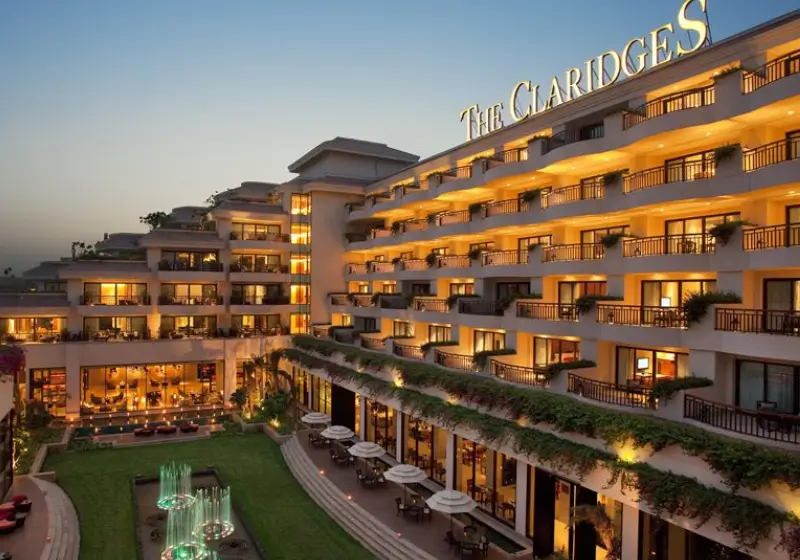
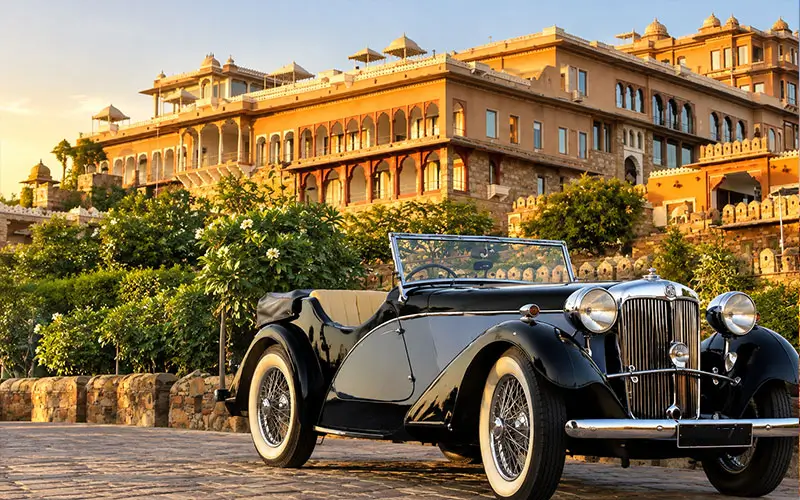
The route also gives travellers considerable freedom with hotels. Delhi can use a modern four-star or five-star property, Agra can include a Taj-facing room, Jaipur and Jodhpur can introduce heritage accommodation, and Udaipur can finish the holiday with a premium lake-facing hotel.
For two adults sharing one room, a comfortable four-star private package can realistically cost around US$3,400 to US$5,000 for two travellers, excluding international airfare. Five-star arrangements can reasonably range from approximately US$5,500 to US$8,500 for two, while premium palace hotels, suites and luxury private services can push the total beyond US$10,000 to US$15,000.
The exact price depends on duration, hotels, room categories, vehicle, guides, monument tickets and any premium experiences included.
Delhi is the most practical starting point for this itinerary because it provides a major international gateway and connects naturally with Agra by road. Travellers should ideally spend two or three nights in the capital before continuing towards Rajasthan.
The first day should account for the international arrival time.
Travellers landing during the morning may be tempted to begin sightseeing immediately, but airport procedures, baggage collection and hotel transfer can make the day longer than expected. A light afternoon or free evening often produces a better start to a private North India and Rajasthan tour.
Delhi sightseeing can then be divided between Old Delhi and New Delhi.
Old Delhi provides the historic atmosphere around Jama Masjid, Chandni Chowk and its surrounding lanes. This area is busy and densely packed, making a private guide particularly valuable for first-time visitors.
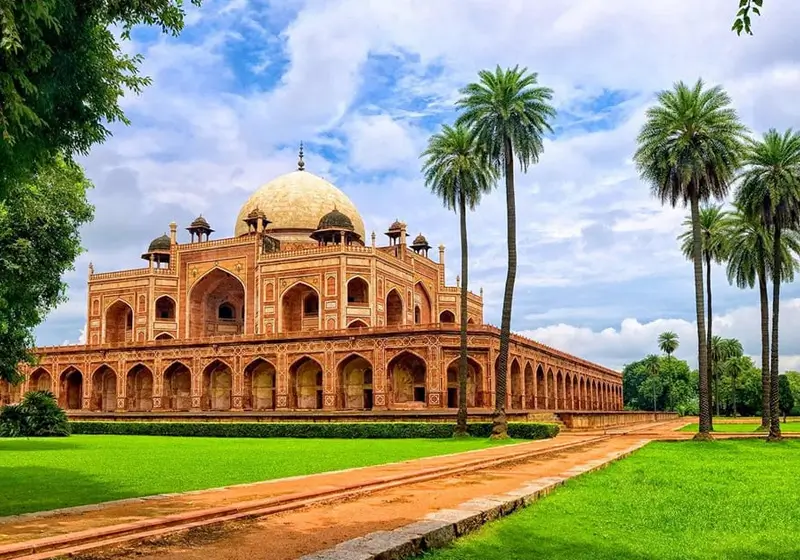
New Delhi contains a different group of important attractions. Humayun's Tomb is particularly worthwhile because its Mughal garden-tomb architecture provides historical context before travellers see the Taj Mahal.
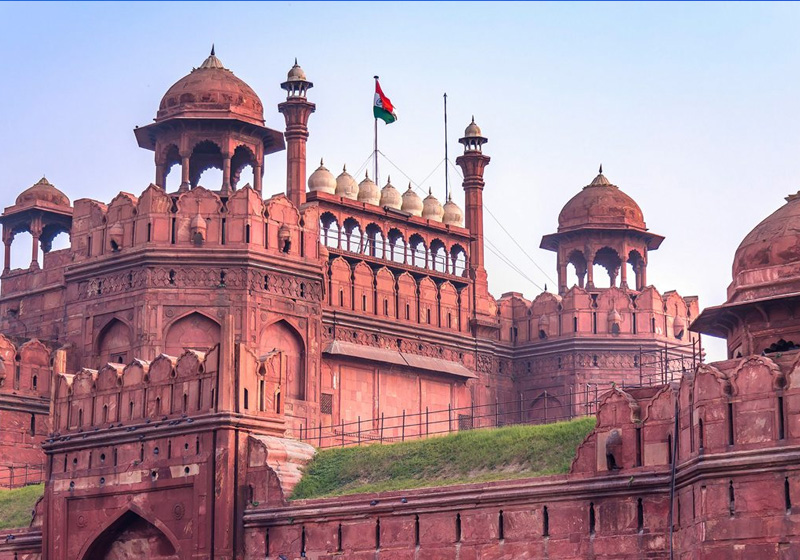
Qutub Minar and its surrounding complex deserve substantial time. India Gate and selected parts of the capital's ceremonial district can also be incorporated according to access and traffic conditions.
Two sightseeing days mean visitors do not need to rush through all these places within a few hours.
The road journey from Delhi to Agra can then begin after breakfast. Under suitable traffic conditions, travellers should allow approximately four hours, although actual journey time can vary.
A Delhi to Agra private car provides hotel-to-hotel convenience. Travellers can stop for refreshments when required and avoid handling luggage at stations.
After reaching Agra, visitors can check into their hotel and visit Agra Fort according to the arrival time.
Agra Fort is worth a detailed visit. Its fortified walls, courtyards and Mughal palace sections provide a broader picture of the dynasty responsible for many of the monuments travellers see on this route.
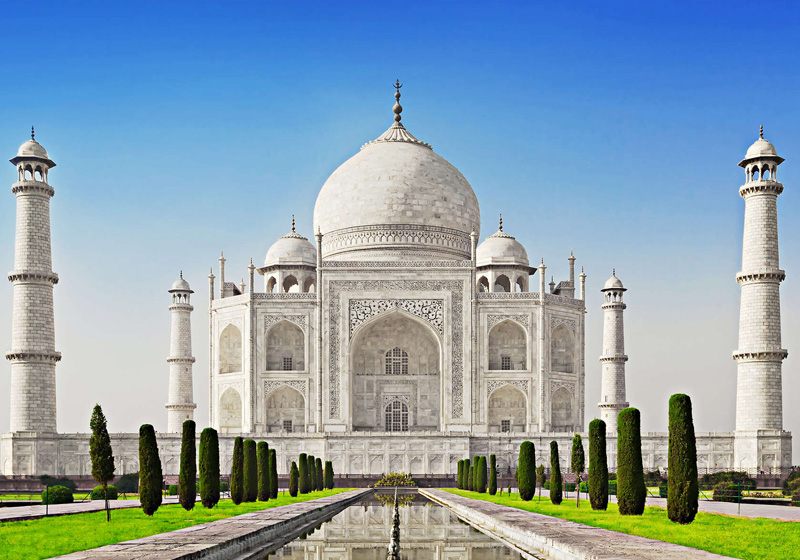
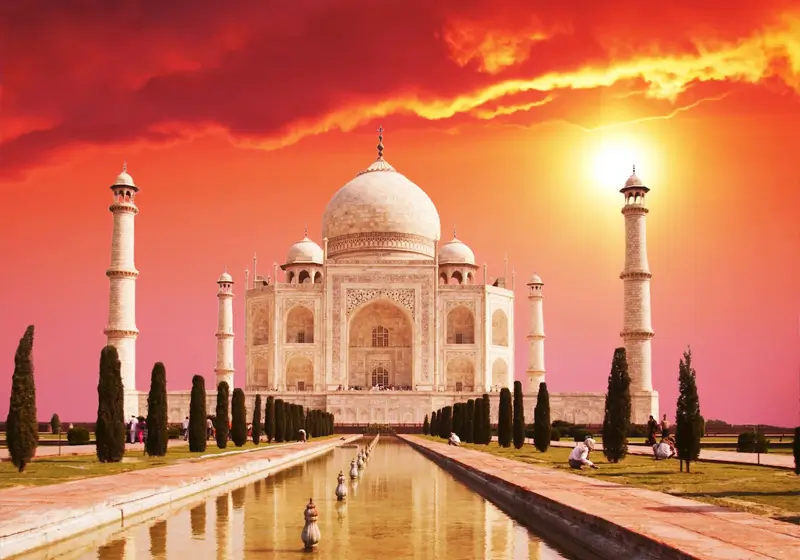
The Taj Mahal can be visited the following morning.
Many visitors prefer sunrise because the early light can be attractive and temperatures may be more comfortable during suitable months. Travellers who dislike very early starts can choose a later entry.
The Taj Mahal is closed to general visitors on Fridays. The entire itinerary should therefore be checked against the Agra date before hotel reservations become non-refundable.
One or two nights in Agra are sufficient for most travellers, but guests paying for a premium Taj-facing room may prefer two nights so they can enjoy the hotel rather than immediately leaving after their monument visit.
Turn your India holiday into a personalised journey through Delhi, Agra and Rajasthan. Choose your preferred hotels, sightseeing, private vehicle and travel pace, with optional experiences such as Ranakpur and luxury stays in Udaipur.
The journey from Agra to Jaipur marks the transition from the core Mughal destinations into Rajasthan.
Fatehpur Sikri can be included during this road sector. The former Mughal capital contains substantial historic architecture and deserves a proper visit rather than a brief roadside stop.
Adding Fatehpur Sikri makes the transfer day longer.
Travellers should therefore avoid scheduling several major Jaipur monuments immediately after arrival. Reaching the hotel, checking in and keeping the evening relatively free is usually a better use of the day.
Jaipur deserves approximately three nights on a Delhi Agra Rajasthan tour package.
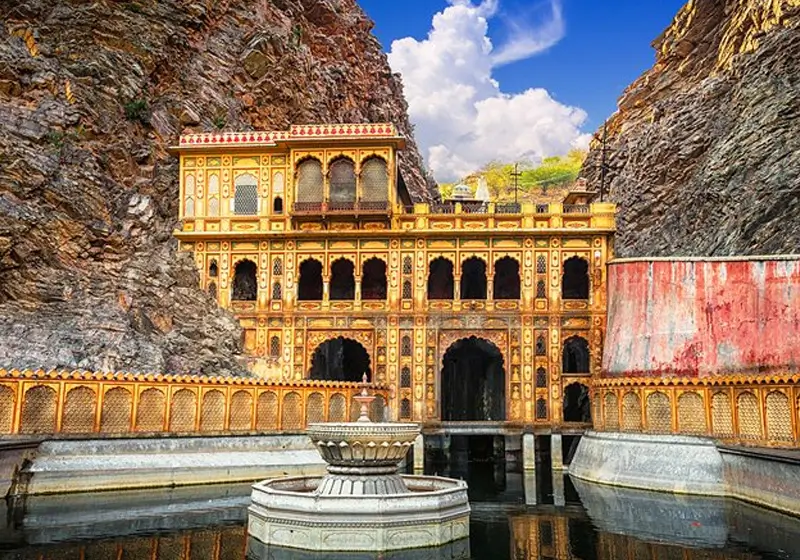
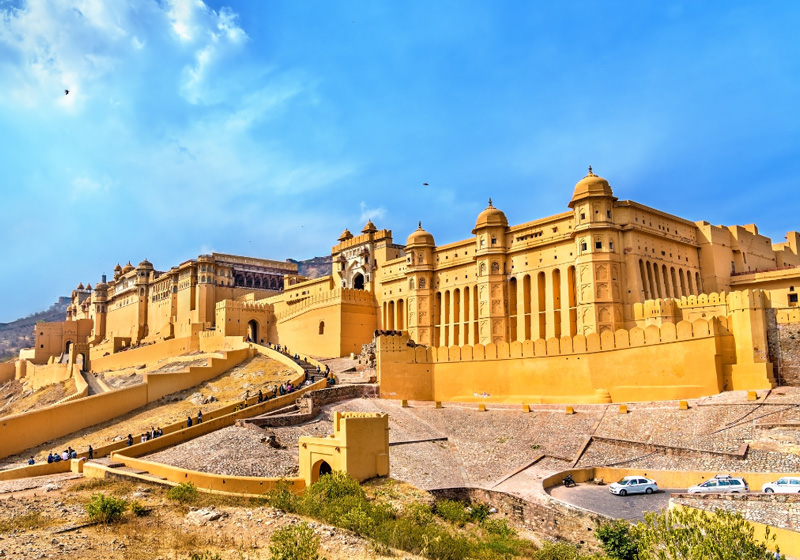
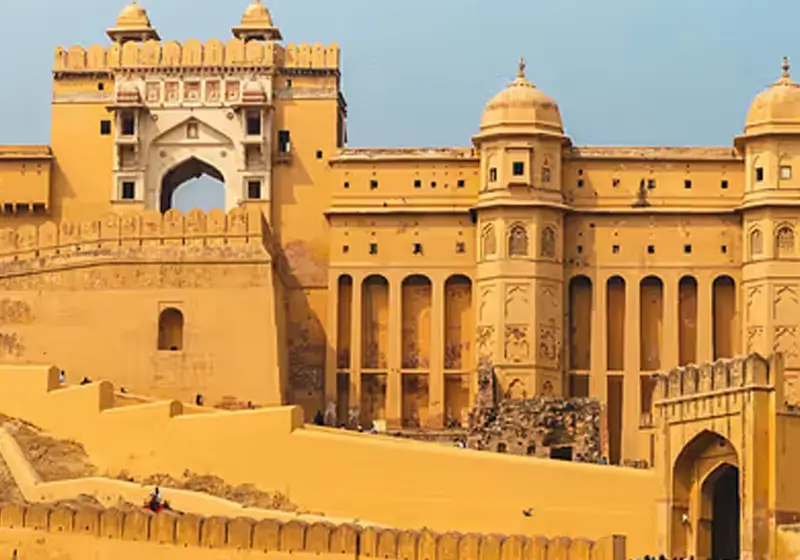
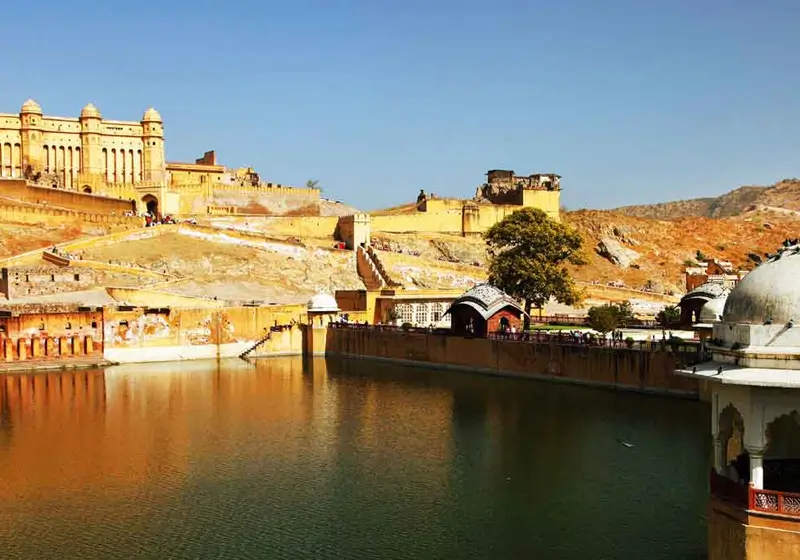
Amber Fort should form one of the main sightseeing visits. Located outside the central old city, the fort occupies a dramatic hillside position and contains courtyards, gateways, halls and decorated interiors.
Visitors interested in history and architecture can easily spend several hours here.
The central Jaipur attractions can be visited during another section of the itinerary.
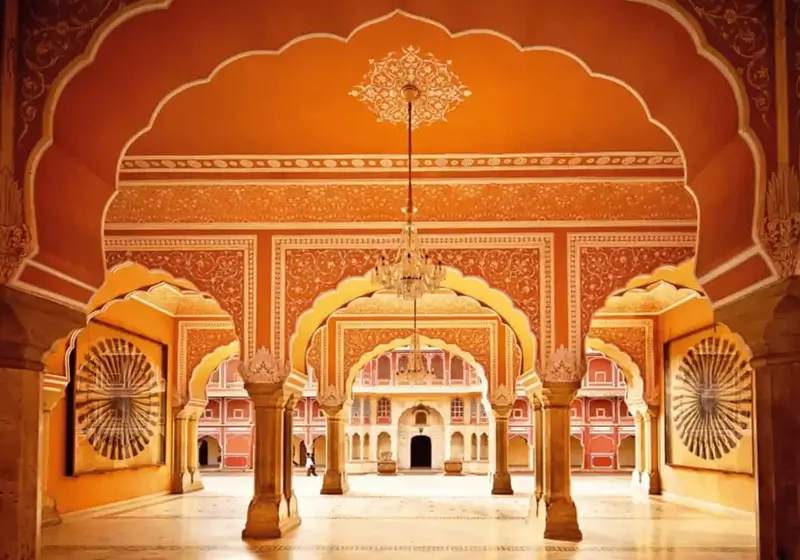
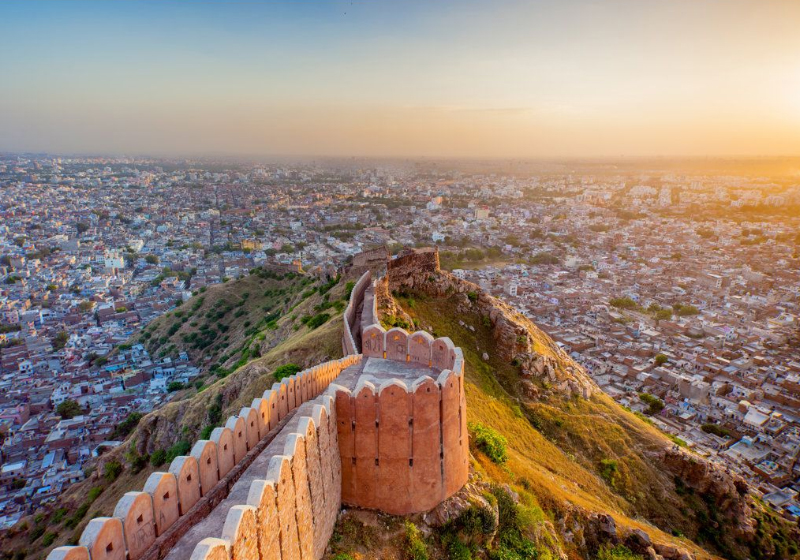
City Palace provides royal architecture and museum collections, while Jantar Mantar presents an extraordinary group of historic astronomical instruments. Hawa Mahal remains Jaipur's most recognisable façade and can be combined with time in the surrounding old-city area.
Three nights also create space for Jaipur beyond monuments.
The city remains one of India's major centres for textiles, jewellery, block printing, carpets, gemstones and handicrafts. Travellers genuinely interested in these products can allocate a few hours to reputable markets and workshops.
Shopping should never become compulsory.
A private Jaipur tour should allow guests who are not interested in shopping to use the time for another attraction, a longer lunch or their hotel.
Accommodation can significantly change the Jaipur experience.
Modern five-star hotels provide extensive facilities, while heritage properties can place travellers in buildings inspired by or connected with Rajasthan's historic architecture.
Couples may prefer the atmosphere of a heritage stay. Families may find a modern hotel with larger recreational areas more practical. Senior travellers should check lift access and walking distances within older properties.
Jaipur is also where the pace of the Rajasthan section should become apparent. A good itinerary does not leave the hotel before sunrise every morning. There should be enough time to enjoy breakfast, rest after sightseeing and spend an evening independently.
The road journey from Jaipur to Jodhpur is considerably longer than Delhi to Agra. Travellers should expect a substantial transfer day and avoid treating the arrival afternoon as a normal sightseeing day.
Under normal road conditions, the journey can take roughly six to seven hours, with the actual duration depending on traffic, road conditions, stops and hotel locations.
This is where having an appropriately sized private vehicle becomes important.
A couple may be comfortable in a good sedan, but an MPV can provide additional legroom and luggage space on longer Rajasthan sectors. Families and groups should make sure the vehicle has enough storage for their actual suitcases rather than relying solely on the advertised passenger capacity.
After reaching Jodhpur, the evening can remain free.
Two nights are generally suitable for the city.
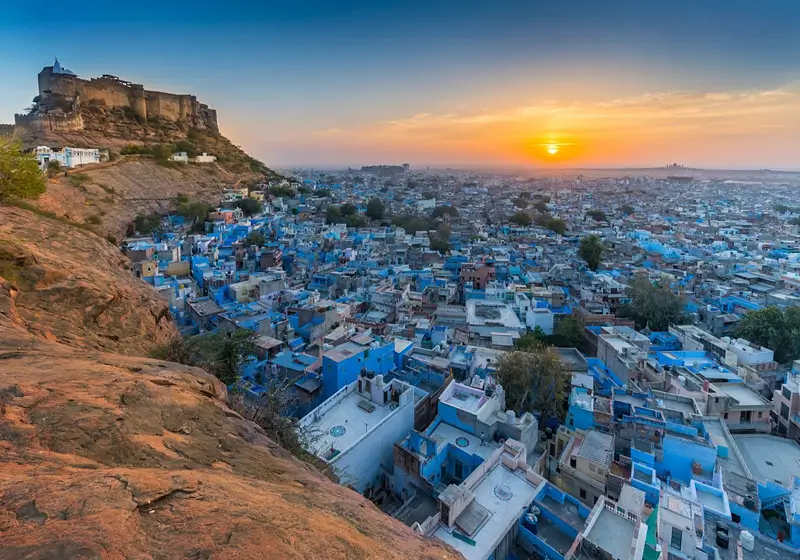
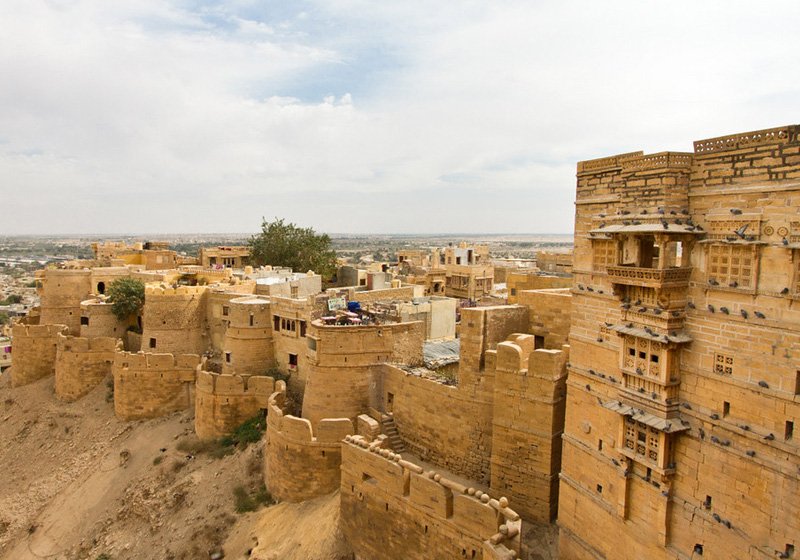
Mehrangarh Fort should be the centrepiece of the following day's sightseeing. Rising dramatically above Jodhpur, the fort is one of Rajasthan's most imposing historic complexes.
The visit should not be rushed.
Its courtyards, galleries, historic rooms and elevated viewpoints can occupy several hours. From the fort, travellers can also appreciate the blue-painted neighbourhoods that gave Jodhpur its familiar nickname.
The Jodhpur private sightseeing tour can continue with selected attractions and time around the old city according to the traveller's interests.
Jodhpur's streets and markets provide a different atmosphere from Jaipur. The city can feel more compact around its historic centre, while Mehrangarh creates a powerful visual backdrop.
Travellers interested in photography may want additional time around the old neighbourhoods rather than adding multiple formal monuments.
Jodhpur also offers excellent accommodation choices.
Good four-star hotels keep the overall package price controlled. Heritage properties introduce traditional architecture, while premium luxury hotels can turn the city into one of the most expensive nights of the journey.
The decision should reflect how much time guests intend to spend at the property.
Paying a substantial premium for an exceptional hotel makes more sense when the itinerary leaves enough time to enjoy it.
The journey from Jodhpur to Udaipur is one of the most interesting road sectors of the itinerary because a visit around Ranakpur can be incorporated when suitable for the route and traveller.
Travellers should treat this as a full transfer day.
A Jodhpur to Udaipur private car tour with a sightseeing stop can require much of the day once driving, breaks and the visit itself are included.
Ranakpur is known for its remarkable Jain temple architecture. The principal marble temple contains an extraordinary interior of carved pillars and detailed stonework.
Entry procedures, visitor timings, photography rules and access arrangements can change, so the day's schedule should be checked locally rather than assuming unrestricted access throughout the day.
Visitors should also remember that it remains an active religious site. Appropriate clothing and respectful behaviour are important.
After the visit, the journey continues through Rajasthan towards Udaipur.
Arriving in Udaipur after a full road day should be followed by hotel check-in and a free evening. There is no practical reason to immediately add a long city sightseeing programme.
This is particularly important for guests staying at a premium property.
Udaipur contains some of the most attractive hotel settings on the entire Rajasthan private tour itinerary, and travellers should actually have time to use them.
The road journey also demonstrates one of the advantages of travelling privately. Departure time can be adjusted, comfort stops can be taken when required, and travellers are not waiting for an entire coach group at every stop.
The driver remains responsible for transportation rather than detailed sightseeing interpretation. A specialist guide can be arranged at the appropriate destinations.
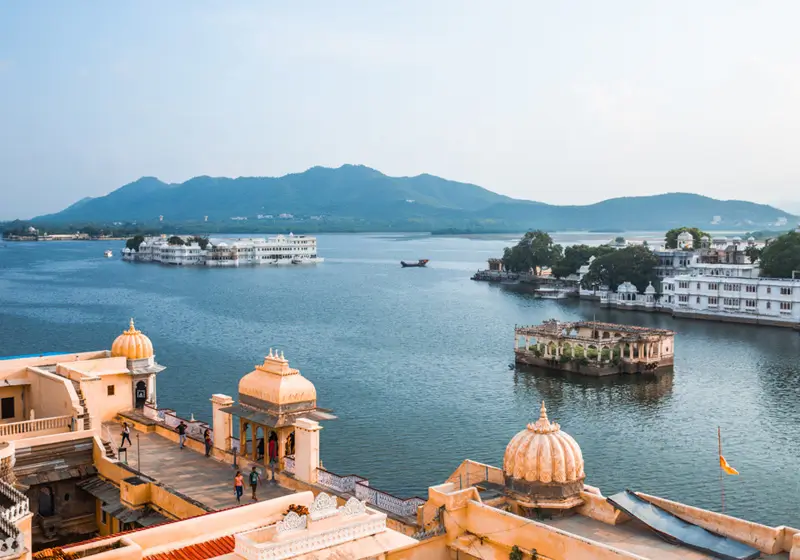
Udaipur is an excellent place to finish a Rajasthan road journey because its lakeside setting provides a slower atmosphere after Delhi, Agra, Jaipur and Jodhpur.
At least two nights should be included. Three nights are preferable when the total itinerary reaches thirteen or fourteen days.
City Palace is the principal historic attraction.
The palace complex occupies a commanding position above Lake Pichola and contains courtyards, balconies, galleries and historic interiors. Travellers interested in architecture should allow enough time rather than treating it as a short morning visit.
The old-city area around the palace can be explored according to the traveller's interests and comfort with walking.
Lake Pichola is another major part of the Udaipur experience.
Boat rides can operate according to local schedules, weather and water conditions. The exact boarding point, duration and type of boat should be confirmed when the activity is booked.
A private or premium boat arrangement should not be assumed merely because the overall holiday is private. If exclusivity matters, it should be written into the package.
Udaipur's hotel market is especially important for couples.
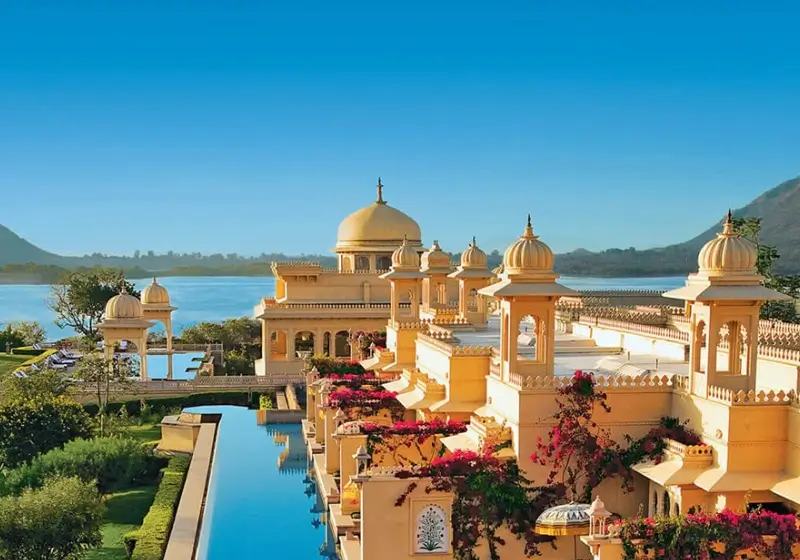
A luxury Udaipur tour package may include a lake-facing room, heritage suite or one of the city's prestigious palace properties. Prices can vary dramatically even within the same hotel.
A standard room, partial-view room, lake-view room and premium suite may all have completely different rates.
Travellers should therefore ask for the exact room category.
Three nights allow enough time for City Palace, a boat experience and additional sightseeing while retaining an afternoon or evening for the hotel.
This can be one of the most valuable parts of the entire journey.
After several long road transfers, travellers often appreciate a day that does not require packing their suitcase or leaving the hotel early.
Depending on international flight arrangements, the tour can finish in Udaipur with a domestic connection to a major international gateway.
The Delhi Agra Jaipur Jodhpur Udaipur tour cost depends heavily on the number of nights and accommodation category.
For two adults sharing one room, a quality four-star private trip of approximately 11 to 14 days can realistically cost around US$3,400 to US$5,000 for two people.
This range can cover good hotels with breakfast, a suitable air-conditioned private vehicle for road sectors, driver expenses, airport transfers and local guides according to the package structure.
Entrance fees need to be checked separately.
A genuine five-star itinerary can cost approximately US$5,500 to US$8,500 for two travellers.
This level allows stronger hotel brands, higher room standards and premium heritage properties in selected destinations.
A luxury itinerary using prestigious palace hotels, suites, premium Taj-view accommodation and high-category lake-facing rooms can cost approximately US$10,000 to US$15,000 or more for two travellers.
International airfare is normally separate.
A broad daily budget for good four-star private travel can therefore sit around US$280 to US$380 per day for two people, although premium sightseeing days and hotels can cost more.
Five-star private arrangements can reach approximately US$450 to US$650 per day for two.
Premium palace travel can exceed US$800 to US$1,100 per day for the couple.
These figures should be treated as realistic budgeting ranges rather than permanent tariffs.
Hotel prices can increase sharply during high-demand dates. Room upgrades can also create major differences.
A Taj-facing room in Agra and premium lake-view room in Udaipur may add hundreds of dollars compared with base rooms at the same hotels.
A proper quotation should therefore state exactly what the traveller receives.
A private vehicle is one of the most important components of this itinerary because the majority of the route is completed overland.
The car can begin with Delhi sightseeing and continue through Agra, Jaipur, Jodhpur and Udaipur, depending on the final transport arrangement.
The price of a private car and driver Rajasthan tour depends on vehicle category, duration and route.
Rather than selecting the cheapest possible car, travellers should consider the amount of time they will spend inside it.
Delhi to Agra is a relatively straightforward sector, but Jaipur to Jodhpur and Jodhpur to Udaipur involve much longer road days.
For a couple, a comfortable sedan may be adequate. An MPV provides more cabin and luggage space and can be worth the additional cost on a multi-day route.
Families and groups need a larger vehicle.
A higher-side working allowance for a private tourist vehicle with driver across a multi-city Rajasthan circuit can broadly fall around US$70 to US$130 per day, depending on vehicle category and route. Larger premium vehicles can cost considerably more.
The final transport quotation should clearly address fuel, tolls, parking, applicable interstate charges and driver expenses.
If these are excluded, the traveller should know the expected additional cost before booking.
Daily driving limits and outstation conditions can also apply depending on the transport arrangement.
The cheapest transport quotation is not necessarily the best option on a 12-day journey. Vehicle condition, air conditioning, luggage space and driver reliability matter considerably more when travellers are covering hundreds of kilometres.
Discover Delhi, the Taj Mahal, Jaipur, Jodhpur and Udaipur in comfort with a private chauffeur-driven journey. Stay in carefully selected hotels, explore magnificent forts and palaces, and enjoy a tailor-made Rajasthan experience at your own pace.
Hotel selection should vary according to the character of each destination.
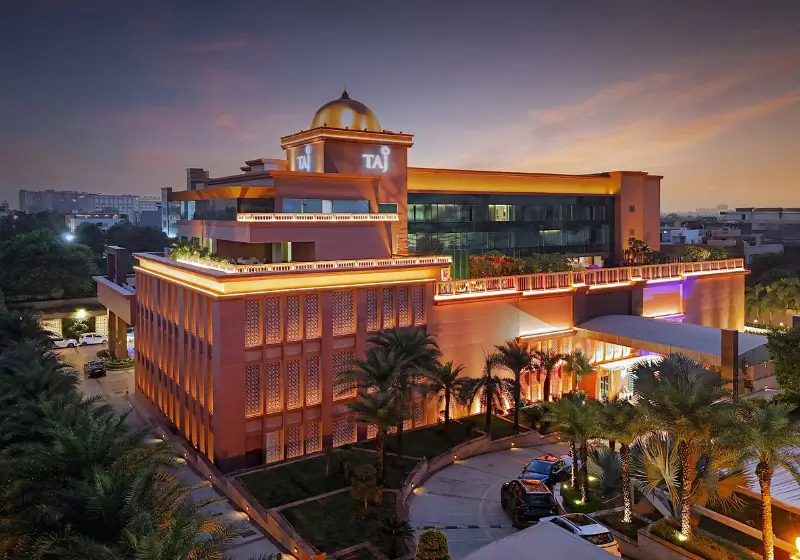
In Delhi, travellers may prioritise a modern hotel with comfortable rooms, strong breakfast facilities and convenient road access.
In Agra, location and Taj Mahal views become more important.
A premium Taj view hotel in Agra can be worthwhile for couples, but the exact view category should be confirmed. Hotel marketing photographs do not guarantee that every room overlooks the monument.
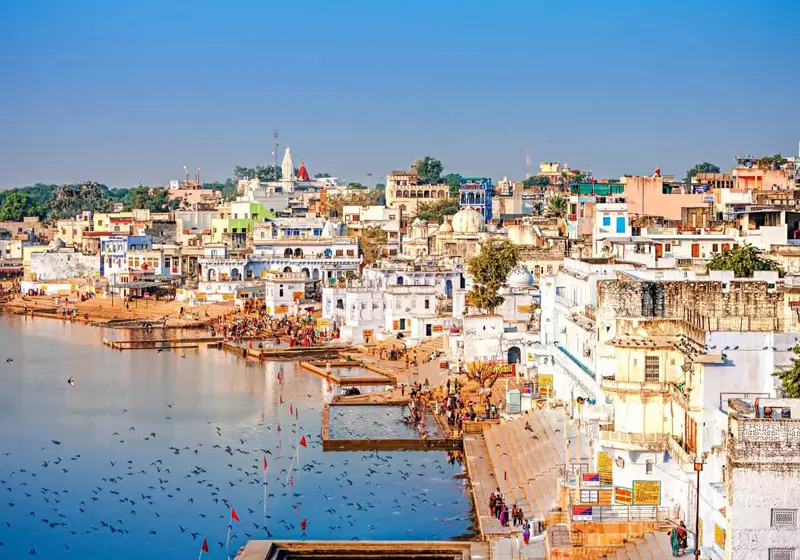
Jaipur is a strong destination for heritage accommodation.
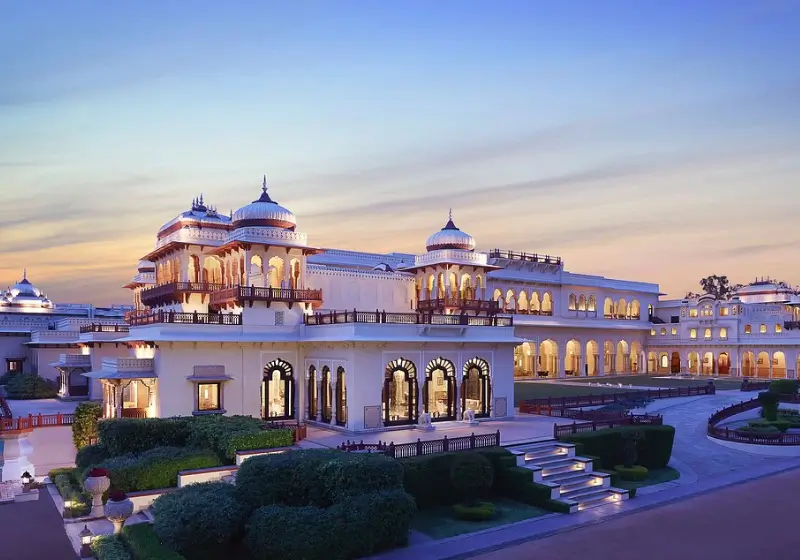
A restored haveli or palace-style property can provide more Rajasthan character than a conventional business hotel.
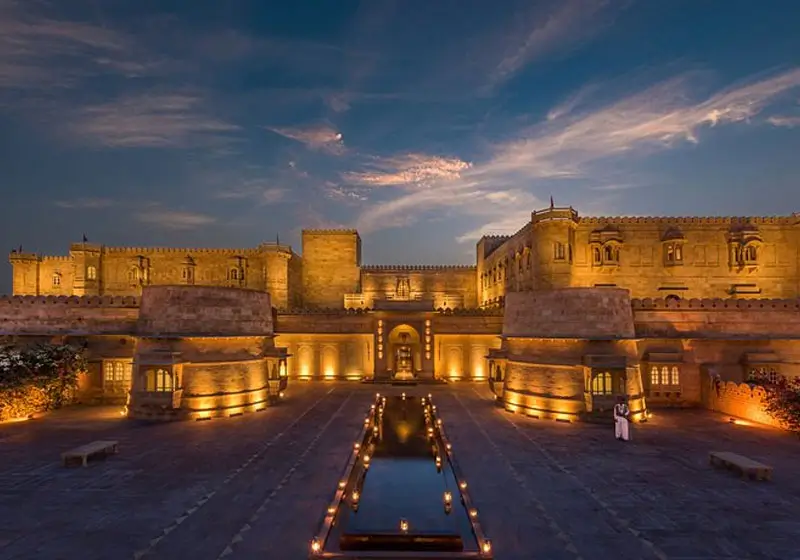
Jodhpur also offers distinctive heritage and luxury properties, including hotels where the architecture and setting become part of the destination.
Udaipur has the greatest potential for a major upgrade.
Lake-facing rooms and palace hotels can transform the final nights, but they can also account for a large percentage of the total package cost.
A practical approach is to mix categories.
Travellers can use good four-star or standard five-star hotels in Delhi and Agra, choose a heritage property in Jaipur or Jodhpur, and reserve the largest upgrade for Udaipur.
This creates a more interesting hotel experience while controlling the overall Rajasthan tour package price.
Monument admission should be addressed before the tour is confirmed.
This route contains numerous paid attractions, including major monuments in Delhi, the Taj Mahal and Agra Fort, Jaipur's forts and palaces, Jodhpur's principal historic attractions and Udaipur's City Palace.
Foreign visitor admission charges can be higher than domestic rates.
Travellers should therefore ask whether the package includes all listed monument tickets or whether they are payable locally.
The same applies to local guides.
A driver should not automatically be expected to provide professional monument commentary.
Delhi, Agra, Jaipur, Jodhpur and Udaipur can each use specialist local guides according to the traveller's requirements.
For a private trip, the guide does not need to remain with the travellers from breakfast until dinner. Guiding can be arranged specifically for the major sightseeing hours.
Meals should also be considered.
Breakfast is commonly included with hotels. Lunch and dinner can remain independent, allowing travellers to select restaurants.
A reasonable personal allowance should be kept for meals, drinks, gratuities and optional shopping.
Travellers interested in jewellery, textiles, carpets or expensive handicrafts should purchase carefully and request appropriate documentation for high-value items.
Commercial stops should always remain optional.
Eleven days can cover the route, but the schedule will be relatively active.
Around twelve to fourteen days provides a much better balance.
Delhi should ideally receive two or three nights. Agra needs one or two. Jaipur works best with three nights. Jodhpur deserves two, and Udaipur should receive at least two, preferably three when the overall schedule allows.
The best Delhi Agra Jaipur Jodhpur Udaipur itinerary is therefore not the version that reaches every city fastest.
A longer stay in Jaipur can provide a free afternoon after Amber Fort. Two nights in Jodhpur prevent travellers from immediately leaving after a six-hour drive. Three nights in Udaipur create a slower ending to the journey.
Families should especially avoid consecutive early starts.
Senior travellers should consider walking requirements at forts and palaces, where stairs and uneven surfaces are common.
Couples may want to reserve one or two evenings for independent dining.
A private itinerary gives travellers the ability to change the day's pace according to energy levels. That flexibility is particularly valuable on a route containing several long road journeys.
Around 11 to 14 days is suitable. Twelve to fourteen days provides a more comfortable schedule with enough time in Jaipur, Jodhpur and Udaipur.
For two travellers, a quality four-star private package can realistically cost around US$3,400–US$5,000. Five-star arrangements can range around US$5,500–US$8,500, while premium palace-hotel itineraries can exceed US$10,000.
Most of it can. Delhi, Agra, Jaipur, Jodhpur and Udaipur form a logical private-road itinerary. A domestic flight can be used after Udaipur when travellers need to connect with an international departure city.
Travellers should broadly allow around six to seven hours, although the actual journey depends on traffic, stops, road conditions and hotel locations.
Yes, particularly for travellers interested in architecture. A Ranakpur stop can turn the transfer into a full sightseeing day, so the Udaipur arrival evening should normally remain free.
Approximately three nights works very well. It gives enough time for Amber Fort, City Palace, Jantar Mantar, the old city and some independent time without rushing.
Two nights is a reasonable minimum, while three nights is preferable on a 13- or 14-day itinerary. The extra night allows travellers to enjoy Lake Pichola, City Palace and their hotel at a slower pace.
This depends on the quotation. Travellers should confirm whether monument entrance fees are included. The Taj Mahal is also closed to general visitors on Fridays, which must be considered when arranging Agra.
A private driver manages transportation, while professional local guides provide detailed sightseeing interpretation. Guides are particularly useful in Delhi, Agra, Jaipur, Jodhpur and Udaipur.
Yes. A Delhi Agra Jaipur Jodhpur Udaipur tour package combines Delhi, the Taj Mahal and three very different Rajasthan cities within one logical route. It is particularly suitable for travellers who want forts, palaces, heritage hotels and private road travel without adding unnecessary domestic flights.
Fill in the details below. Our expert consultant will respond within 4 hours with a bespoke itinerary crafted just for you — completely free, no obligation.